National Hyperbaric Medicine Institute • Physician Directed Care

When Nothing Else Has Worked,
This Is Where Recovery Gets Real.

Help your body restart the recovery process with physician-supervised oxygen therapy.

  • Physician supervised treatment
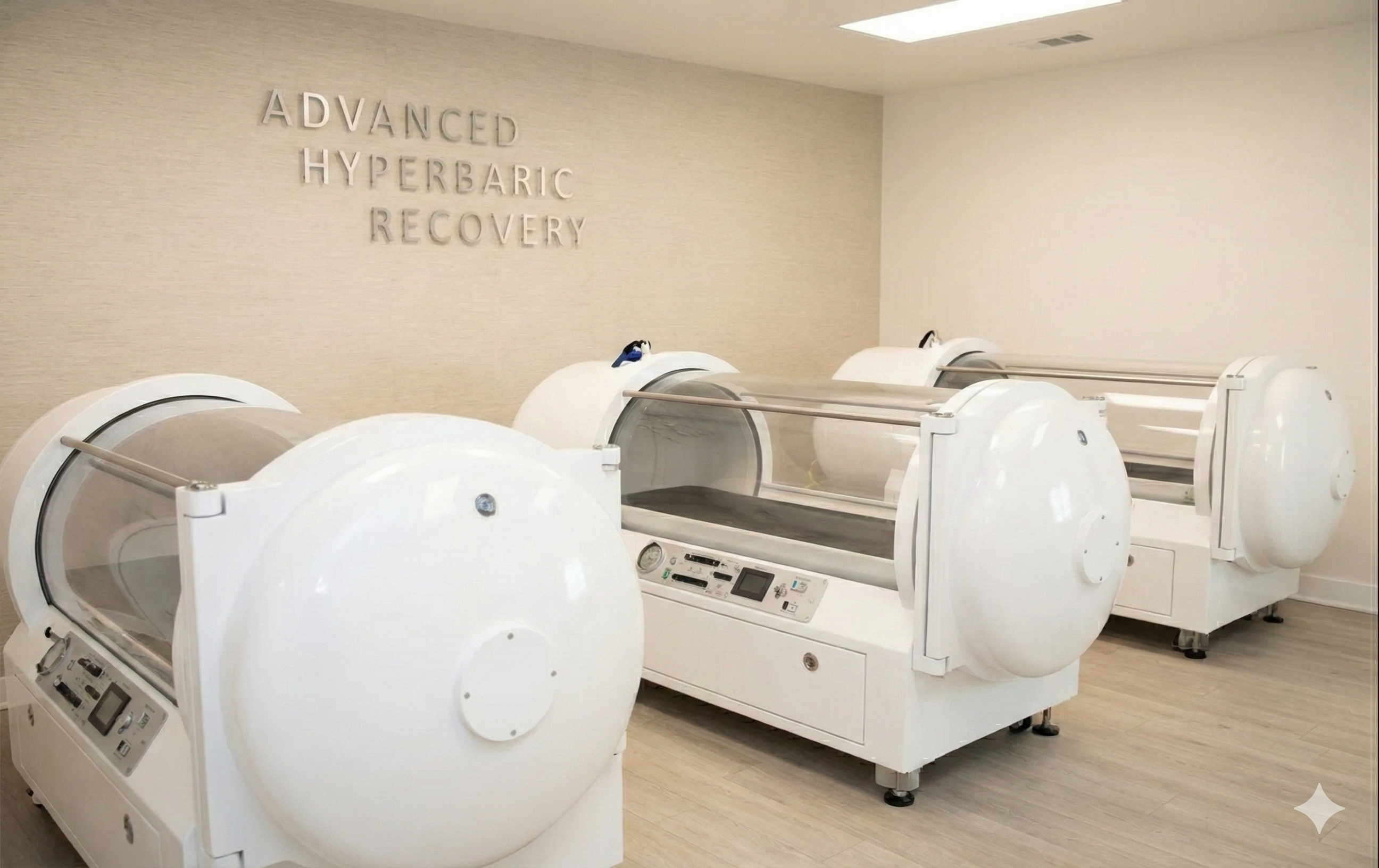
  • Hard-shell medical chambers
  • Baseline and progress reviews included

Treatment subject to physician clearance and medical eligibility.

The clinical protocol

Why treatment is structured

"We do not ask patients to rely on hope. We build a clinical framework where progress can be observed, documented, and reviewed with you."

This program is designed for patients seeking serious physician directed care after standard approaches have not produced the improvement they expected. Hyperbaric oxygen therapy increases oxygen availability at therapeutic pressure, which may support circulation to smaller vessels, inflammatory modulation, and tissue repair signaling. The purpose of a structured treatment arc is to create enough clinical signal over time for your physician to evaluate response at defined checkpoints.

Physician supervised care

Comprehensive contraindication screening, medical eligibility review, and direct physician oversight on treatment delivery.

Clinical framework

A structured series often recommended for complex recovery goals so your physician can evaluate response at defined checkpoints. The exact number of sessions is determined after medical review and may vary. Care is delivered in rigid, steel chambers at therapeutic pressures between 1.5 and 2.4 ATA, with baseline and follow-up assessments.
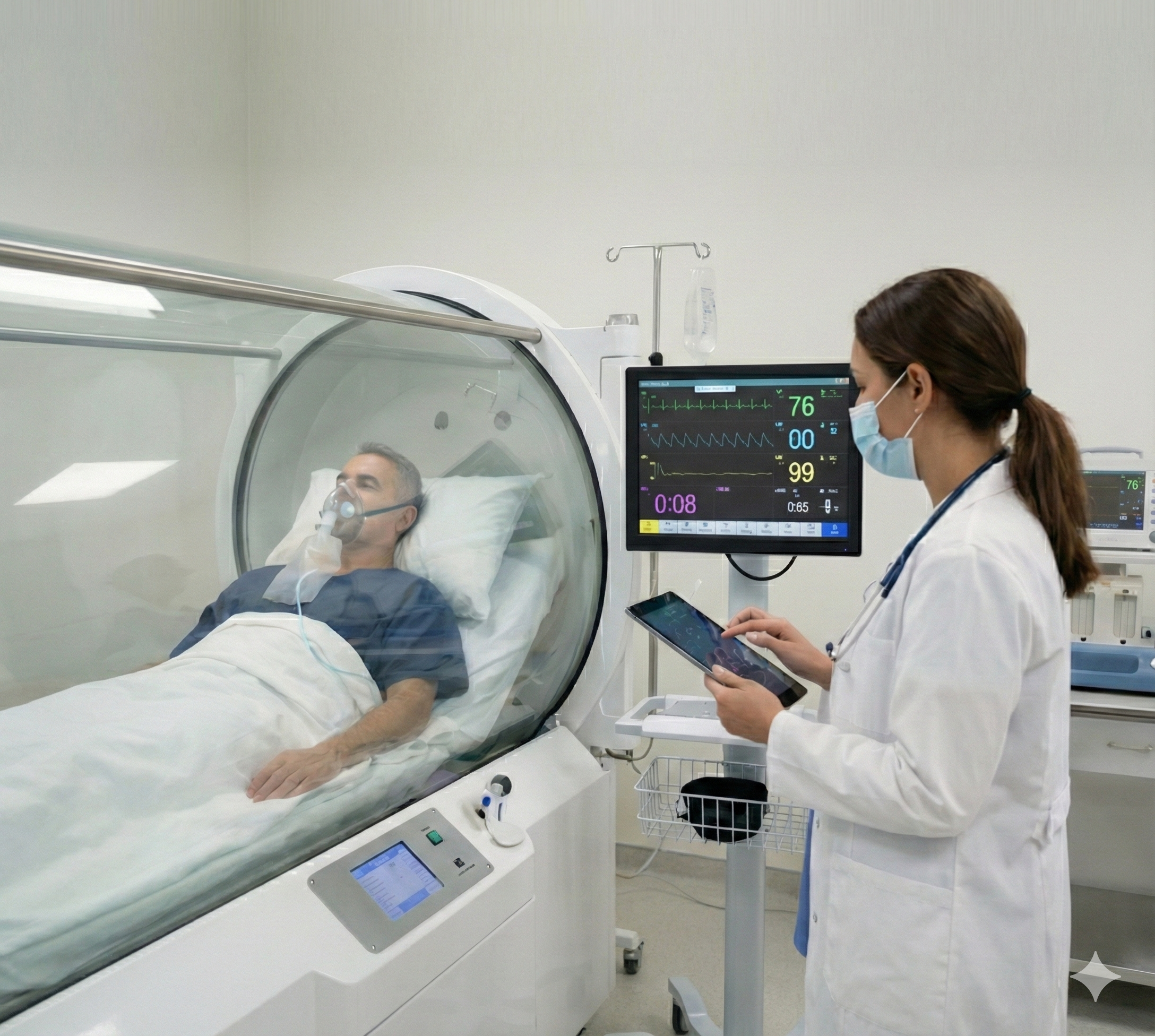
Patient in NHMI hyperbaric chamber
Hyperbaric therapy at NHMI

Hyperbaric Therapy

Hyperbaric Oxygen Therapy Under Physician Supervision

In a pressurized hard shell chamber, medical grade oxygen can dissolve into plasma and may increase oxygen availability to tissues. Physicians may use HBOT as an adjunctive therapy to support circulation, inflammatory modulation, and repair processes in selected patients. Treatment planning, contraindication screening, and monitoring are handled by our clinical team.

Have questions right now? Call our clinical team at (555) 201‑1600.

A clinical environment designed for safety and measurable monitoring

By combining 100% oxygen with elevated pressure, HBOT dissolves oxygen directly into the plasma and other body fluids, not just red blood cells. At therapeutic pressure, oxygen dissolves into plasma and may reach areas that normal circulation does not fully supply. Over time, this may support microcirculation, mitochondrial function, inflammatory regulation, and tissue repair signaling. For complex recovery goals, physicians often recommend a structured series so response can be evaluated at baseline, midpoint, and follow up. The appropriate schedule is individualized after evaluation.

In our medical‑grade chambers, pressures typically range from 1.5 to 2.4 ATA, allowing oxygen levels in the body to increase dramatically compared to normal breathing at sea level.

These physiologic effects may support:

  • Improved blood flow and microcirculation
  • Encouragement of tissue regeneration and collagen production
  • Modulation of inflammation and inflammatory proteins
  • Enhanced function of mitochondria and cellular energy production
  • Support for immune function and the body's ability to manage infection

Individual responses vary, and HBOT is used as an adjunctive therapy within a broader medical plan.

Patient in hyperbaric oxygen therapy chamber

What to Expect at NHMI

You will be monitored during each session. Your physician reviews your response at defined checkpoints. Treatment schedules are individualized and determined after evaluation.

Consultation

Our medical team reviews your history, goals, and current treatments to determine whether HBOT is an appropriate option.

Plan Development

A protocol is designed around your needs, including the number of sessions, pressure targets, and integration with your existing care.

Treatment

Sessions typically last around 90 minutes, during which you can rest, listen to music, or watch programming inside the chamber.

Analysis

Throughout and after the protocol, progress is reviewed using symptom scales, functional measures, and physician follow‑up.

Hyperbaric Therapy FAQs

The questions below address how HBOT feels, who it may be appropriate for, and how treatment planning works.

HBOT is a medical treatment in which you breathe 100% oxygen while inside a pressurized chamber. The combination of oxygen and pressure allows more oxygen to dissolve into your bloodstream and tissues than breathing air at normal room pressure.
Eligibility depends on your medical history, current medications, and treatment goals. Our team reviews all of this during the consultation and screening call to determine whether HBOT is appropriate and safe in your specific case.
Many patients pursuing complex recovery goals are advised to follow a structured series so response can be evaluated over time. The appropriate plan depends on your goals, history, and physician clearance.
Most patients describe a gradual pressure change in the ears—similar to takeoff or landing in an airplane—followed by a period of quiet rest inside the chamber. You can typically listen to music or relax while our team monitors you throughout the session.
HBOT is generally well tolerated when delivered in a medical setting, but not everyone is a candidate. Certain lung conditions, recent ear or sinus surgery, some chemotherapy agents, or uncontrolled seizures may make HBOT unsafe, which is why physician clearance is required.
Insurance may cover HBOT for specific FDA‑approved conditions listed on our Conditions page. For off‑label indications, treatment is typically self‑pay; our team will review expected coverage and financial options with you before you begin.
Some patients begin with a shorter series to understand how they respond, then extend based on physician recommendation. We are able to structure care that way. The appropriate plan depends on your goals, history, and physician clearance.

Still have questions? Call (555) 201‑1600 or for a screening call.

Recovery and care at NHMI

Conditions

HBOT is used in both FDA cleared indications and physician directed adjunctive care pathways. Eligibility depends on your medical history, contraindications, and clinical goals. We focus on appropriate use, safety, and physician supervised monitoring.

We can assist with insurance eligibility for FDA approved indications where applicable. Coverage varies by insurer and requires clinical documentation.

Covered Conditions

Examples of goals and use cases physicians may consider in selected patients. Also referred to as on-label, these conditions have been approved by the FDA for HBOT and are generally covered by insurance.

  • Air or Gas Embolism
  • Avascular Necrosis*
  • Carbon Monoxide Poisoning and Smoke Inhalation
  • Central Retinal Artery Occlusion
  • Chronic Refractory Osteomyelitis
  • Crush Injury & Other Acute Traumatic Ischemias
  • Decompression Sickness
  • Diabetic Lower Extremity Wounds
  • Failed Skin Grafts and Flaps
  • Gas Gangrene
  • Necrotizing Soft Tissue Infections
  • Non-Healing Wounds
  • Radiation Tissue Damage
  • Severe Acute Anemia (Bridge Therapy)*
  • Sudden Sensorineural Hearing Loss*
  • Thermal Burns

*Approved by the Undersea Medical Society (UHMS), not the FDA.

Non-Covered Conditions

Examples of goals and use cases physicians may consider in selected patients. Conditions that have not yet been approved by the FDA. In general, off-label conditions are not covered by insurance.

  • Anoxic Brain Injury
  • Arthritis
  • Cancer (Treatment Synergy)
  • Cerebral Palsy
  • Chronic Fatigue Syndrome
  • Chronic Pain
  • Complex Regional Pain Syndrome (CRPS/RSD)
  • Complications of Scleroderma
  • Concussion & Traumatic Brain Injury
  • Crohn's Disease
  • Fibromyalgia
  • Inflammatory Bowel Disease
  • Interstitial Cystitis
  • Long COVID
  • Lyme Disease
  • Migraine / Headache
  • Multiple Sclerosis
  • Pancreatitis
  • Retinitis Pigmentosa
  • Spinal Cord Injuries
  • Sports Injuries
  • Stroke
  • Surgery Preparation & Accelerated Recovery
  • Ulcerative Colitis
Screening and intake at NHMI

How treatment begins

Our process is designed to protect patient safety and ensure appropriate use. We begin with an intake request and screening call, then review your history and contraindications. If appropriate, a physician determines whether HBOT may be recommended and what structured schedule best fits your goals. Progress is reviewed at defined checkpoints.

Program fees and insurance eligibility are reviewed during intake after we understand your history and goals. Nothing proceeds without physician clearance and a clear plan.

Patient Journey

  1. Step 1 Screening call with our clinical team

    Prospective patients connect with a clinical intake coordinator for a 15–30 minute call to review goals, relevant history, and whether HBOT is likely to be appropriate.

  2. Step 2 Medical intake and records review

    Formal intake paperwork, prior imaging, medication lists, and lab work are collected and summarized for the physician team before the consultation.

  3. Step 3 Physician evaluation and clearance

    A hyperbaric physician reviews contraindications, answers questions, and confirms whether a structured treatment series is medically appropriate.

  4. Step 4 Baseline assessment

    When indicated, baseline assessments such as cognitive testing, functional questionnaires, or imaging are completed to allow for objective before‑and‑after comparison.

  5. Step 5 Structured treatment series

    Patients complete a structured schedule of high‑pressure oxygen sessions—typically five days per week—under continuous clinical supervision.

  6. Step 6 Progress checkpoints and review

    At defined checkpoints and conclusion of the protocol, results, symptom changes, and follow‑up options are reviewed with the physician, including recommendations for longer‑term maintenance.

Pricing & Insurance

On-Label (Insurance-Based) Care

For FDA‑approved indications, the clinic bills a patient's insurance when possible, with co‑pays and deductibles determined by each individual plan. Pre‑authorization and documentation requirements are reviewed before treatment begins.

Off-Label / Self-Pay Programs

For conditions not yet covered by insurance, NHMI offers structured self‑pay programs with transparent pricing and no surprise fees.

Financing & Assistance

Patients may be able to spread costs over time through third‑party financing or internal payment plans, and need‑based assistance may be available for qualifying cases.

What a Typical Session Looks Like

On treatment days, patients check in with clinical staff, complete a brief symptom and vital sign review, and are prepared for the chamber by the hyperbaric team. Once inside the chamber, pressure is gradually increased to the prescribed level and 100% oxygen is delivered for the duration of the session.

After each session, patients are monitored as they return to baseline, review any changes with staff, and schedule the next visit in their series.

Specific timing, clothing recommendations, and medication guidelines can be added once standardized by the clinical team.

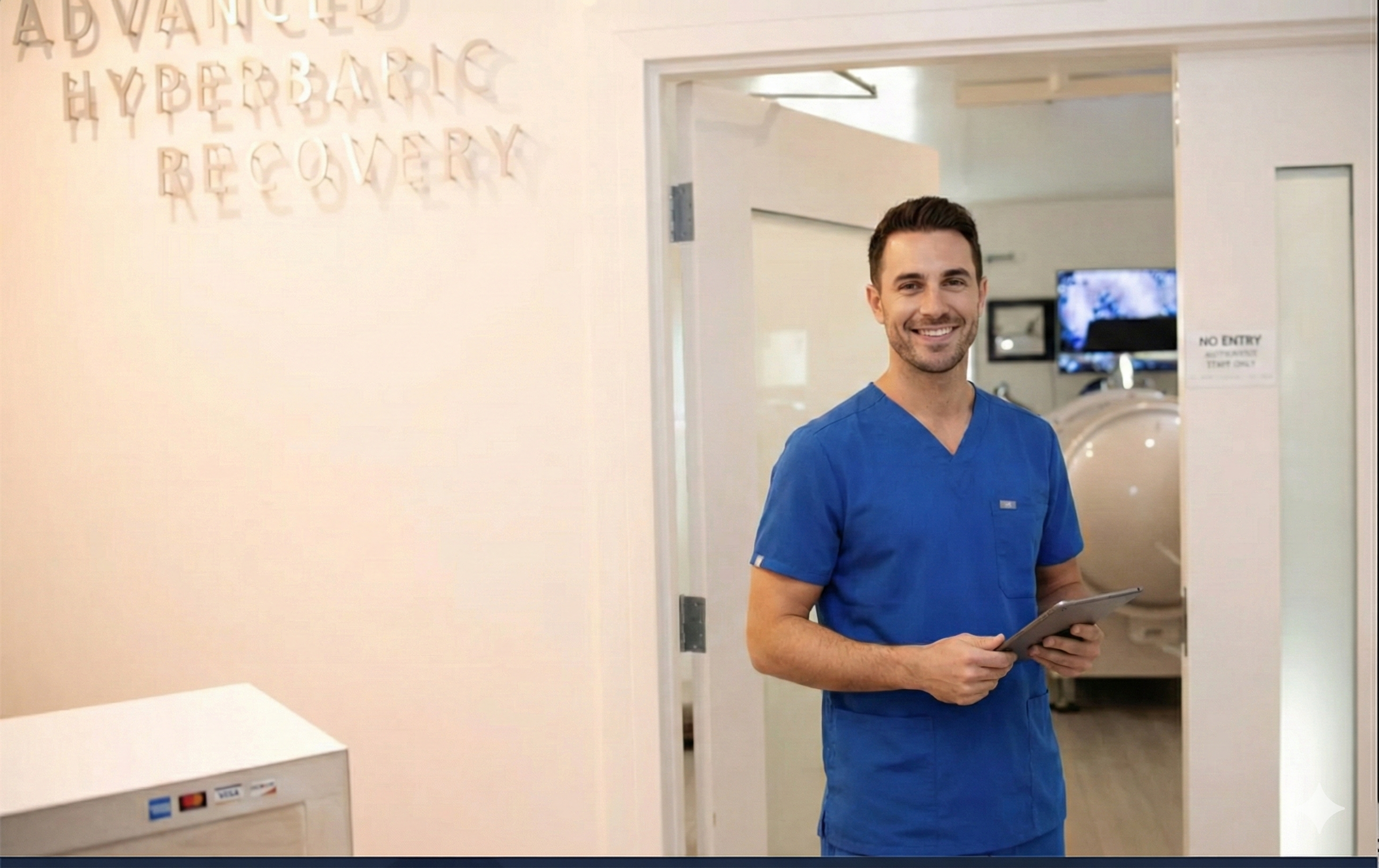
NHMI facility

Clinical Philosophy

NHMI is a physician directed hyperbaric medicine institute built for patients who want serious clinical care when standard approaches have not delivered the improvement they expected. We emphasize appropriate use, safety screening, hard shell chamber standards, and structured monitoring so progress can be evaluated over time.

Our approach is defined by Patient Selection. We believe structured treatment requires a serious commitment. Our facility is led by board-certified physicians specializing in hyperbaric medicine, ensuring that every patient's journey is safe, monitored, and evidence-based.

Clinical Team

Medical Director

Dr. Alexandra Hayes, MD

Board‑certified in Internal Medicine with additional training in Undersea and Hyperbaric Medicine, overseeing clinical protocols and safety standards.

Hyperbaric Physician

Dr. Michael Lerner, DO

Hyperbaric and emergency medicine physician with experience in critical care, complex wound management, and neurologic applications of HBOT.

Clinical Operations

Jordan Patel, RN

Registered nurse responsible for daily chamber operations, patient orientation, and coordination with referring providers.

Safety & Contraindications

Safety is central to our model. Patients undergo contraindication screening and medical clearance before treatment. Monitoring occurs throughout sessions, and care is adjusted based on physician judgment.

  • Examples of absolute contraindications may include untreated pneumothorax or certain types of chemotherapy agents in the recent past.
  • Relative contraindications—such as chronic sinus disease or poorly controlled seizure disorders—are evaluated on a case‑by‑case basis.
  • When appropriate, NHMI coordinates with each patient's existing physicians to ensure HBOT is integrated safely into their broader care plan.

Evidence & Outcomes

We track patient progress using standardized measures and clinical checkpoints where appropriate. Treatment response varies, and decisions are made by physicians based on your history and evaluation.

The NHMI Integrity Standard

  • Physician oversight on 100% of treatment sessions.
  • No use of non-medical grade or "soft" chambers.
  • Strict adherence to safety protocols and clinical monitoring.

NHMI commits to evidence‑informed practice, ethical patient selection, and ongoing collaboration with referring physicians and research partners.

Facility & Logistics

Florida Clinical Headquarters

Our facility is designed as a private clinical environment for hyperbaric medicine. Care is delivered in hospital grade hard shell chambers with defined safety protocols and continuous monitoring.

Our team will help coordinate scheduling, records, and next steps after your intake request.

Private Treatment Suites

Individual monitoring for comfort and safety during the 90-minute treatment window.

Accessibility

Dedicated parking and full ADA-compliant facility for patient visits.

Clinic Details

  • Address: 1200 Harbor Wellness Way, Tampa, Florida 33602
  • Phone: (555) 201-1600
  • Email: info@nhmi-institute.com
  • Hours: Monday–Friday, 8:00am – 5:30pm

To discuss travel logistics or daily scheduling, call (555) 201‑1600.

NHMI Florida clinical headquarters
NHMI

Request Medical Evaluation

A screening call is required before treatment begins.

HBOT is an adjunctive therapy. Not all applications are FDA evaluated. We do not claim to cure, treat, or prevent specific diseases. Treatment is subject to physician clearance and medical eligibility. Individual response varies.

Direct Contact

  • Phone: (555) 201-1600
  • Email: intake@nhmi-institute.com
  • Address: 1200 Harbor Wellness Way, Tampa, Florida 33602

Frequently Asked

  • Do my current diagnoses or medications affect whether I can safely receive HBOT?
  • How do patients who live outside the Tampa area typically structure travel and lodging for the treatment series?
  • Can your team coordinate with my primary physician or specialist regarding my treatment plan?